
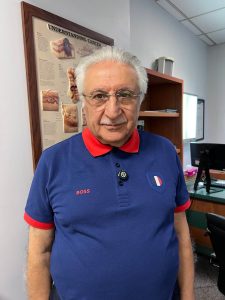
Dr. Masoud Khadivi
Dr. Masoud Khadivi Neurological Spine Surgeon – Tehran University of Medical Sciences (TUMS) Dr. Masoud Khadivi is considered one of the specialized physicians in the
Over the past two decades, Iran has quietly but decisively emerged as one of the most compelling destinations for spinal surgery in the global healthcare landscape. While countries like Germany, the United States, and South Korea have long dominated the field of medical tourism for complex orthopedic and neurosurgical procedures, Iran offers a unique combination of highly skilled surgeons, state‑of‑the‑art hospital infrastructure, and dramatically lower costs. This convergence of quality and affordability has not gone unnoticed by international patients suffering from chronic back pain, herniated discs, spinal stenosis, scoliosis, vertebral fractures, and degenerative spine diseases. What makes Iran particularly attractive is not merely the price advantage, which can be up to 70–80% lower than in Western countries, but the depth of clinical expertise that has been honed over decades of managing some of the most challenging spinal cases in the region. Iranian neurosurgeons and orthopedic spine specialists regularly participate in international congresses, publish in peer‑reviewed journals, and adopt the latest minimally invasive techniques, including endoscopic discectomy, percutaneous pedicle screw fixation, and robotic‑assisted spinal fusion. The country’s major hospitals in Tehran, Shiraz, Isfahan, and Mashhad are equipped with O‑arm navigation systems, 3D imaging, and intraoperative neuromonitoring, ensuring patient safety outcomes that rival the best centers in Europe. Coupled with Iran’s rich cultural heritage and hospitality, the country offers a holistic package for medical travelers seeking not just a cure, but a dignified and comfortable healing journey. In this comprehensive overview, we will explore the clinical capabilities, technological infrastructure, cost advantages, and the pivotal role of a specialized facilitator—Iran Med Bank—in orchestrating seamless medical tourism experiences for spine patients from every corner of the world.
Iran’s Clinical Excellence in Spinal Surgery
The foundation of Iran’s success in spinal surgery rests upon rigorous training programs and a relentless pursuit of innovation. Iranian medical schools, particularly those affiliated with Tehran University of Medical Sciences, Shiraz University of Medical Sciences, and Mashhad University of Medical Sciences, produce graduates who undergo a minimum of seven years of specialized post‑graduate training in neurosurgery or orthopedic surgery, with an additional two to three years of sub‑specialization exclusively in spine surgery. This trajectory ensures that Iranian spinal surgeons are intimately familiar with the full spectrum of pathologies—from simple microdiscectomies to complex revision surgeries for failed previous operations, spinal tumors, and severe traumatic injuries. Many of these surgeons have completed fellowships in North America, Europe, or South Korea, and they actively bring back cutting‑edge techniques such as extreme lateral interbody fusion, oblique lumbar interbody fusion, and cervical disc arthroplasty. Iranian hospitals are not passive adopters of technology; they are increasingly involved in clinical research that refines surgical protocols, reduces infection rates, and improves long‑term functional outcomes. For instance, several Iranian centers have pioneered low‑cost adaptations of navigation systems that make precision surgery accessible even in resource‑constrained settings, without compromising on accuracy. The average annual volume of major spinal procedures in Iran exceeds 50,000 operations, giving surgeons an unparalleled caseload that directly correlates with superior surgical dexterity and complication management. International patients often express surprise at the fluency of English spoken by medical staff, the availability of JCI‑accredited or JCI‑aligned hospitals, and the ease with which they can access multidisciplinary teams comprising physiatrists, pain management specialists, and rehabilitation therapists—all working under one roof to optimize pre‑ and post‑operative care.
Technological Infrastructure and Standards
Iran has made massive investments in medical technology over the last fifteen years, largely driven by a domestic pharmaceutical and medical device industry that has flourished despite international sanctions. Today, major spinal centers are equipped with intraoperative CT scanners, robotic platforms such as the Mazor X or Globus ExcelsiusGPS, and advanced microscope systems that enable unparalleled visualization of neural structures. These technologies allow surgeons to perform percutaneous pedicle screw placement with sub‑millimeter accuracy, reducing muscle damage, blood loss, and hospital stays. Many centers also utilize ultrasonic bone scalpel systems for osteotomies, which minimize thermal injury to surrounding tissues. Post‑operatively, Iranian hospitals employ accelerated rehabilitation protocols that include early mobilization, physical therapy, and hydrotherapy, often in dedicated rehabilitation wings that resemble five‑star wellness resorts rather than clinical wards. Accreditation bodies like the Iranian Ministry of Health’s Hospital Accreditation Program rigorously audit these facilities, and several have achieved international recognition from organizations such as the Joint Commission International or the Australian Council on Healthcare Standards. Importantly, Iran’s regulatory framework for medical devices ensures that all implants—whether pedicle screws, cages, rods, or artificial discs—are imported from reputable global manufacturers (Medtronic, DePuy Synthes, Stryker, NuVasive) or produced locally under strict quality control, with full traceability and warranty. This combination of world‑class technology and rigorous oversight means that a patient undergoing a lumbar fusion in Tehran can expect the same quality of implants and surgical environment as they would in London or New York, but at a fraction of the price.
Cost Benefits and Accessibility
Perhaps the most compelling argument for choosing Iran for spinal surgery is the dramatic cost differential. A typical lumbar decompression and fusion procedure that costs $80,000‑$120,000 in the United States, or €50,000‑€70,000 in Western Europe, can be performed in Iran for $8,000‑$15,000, inclusive of the surgeon’s fee, hospital stay, implants, anesthesia, and post‑operative follow‑up. Even when adding international airfare and accommodation for a companion, the total package remains less than one‑fifth of the Western cost. This affordability does not come at the expense of quality; rather, it reflects Iran’s lower cost of living, competitive pricing of locally manufactured pharmaceuticals and implants, and government subsidies for healthcare infrastructure. Moreover, Iranian hospitals offer transparent, all‑inclusive packages that eliminate hidden charges, a common frustration in many Western medical billing systems. For uninsured patients or those with high‑deductible health plans in their home countries, Iran represents a life‑changing opportunity to access definitive surgical care that might otherwise be financially prohibitive. Additionally, the waiting times are minimal; whereas patients in public healthcare systems of countries like Canada or the UK may wait six to twelve months for elective spine surgery, Iranian centers can schedule operations within one to two weeks of initial consultation—often virtually via telemedicine—allowing patients to plan their travel with confidence and urgency.
The Pivotal Role of Iran Med Bank
Navigating a complex medical journey abroad can be daunting, especially for spinal patients who often have limited mobility, specific medication needs, and anxiety about being far from home. This is where Iran Med Bank steps in as an indispensable facilitator. Iran Med Bank is not a mere travel agency; it is a fully integrated medical tourism service provider that orchestrates every facet of the patient’s experience, from the initial virtual consultation with a top Iranian spinal surgeon to the final farewell at the airport after complete recovery. The company maintains a carefully vetted network of JCI‑aligned hospitals, board‑certified spine specialists, and multilingual coordinators who speak English, Arabic, Russian, French, Spanish, and Chinese, ensuring that language barriers are never an obstacle to informed consent, shared decision‑making, or emotional comfort. Upon a patient’s arrival, Iran Med Bank arranges VIP airport transfers, luxury or mid‑range accommodation options near the treating hospital, and 24/7 on‑call interpreters who accompany patients to every appointment, imaging session, and pre‑operative consultation. More critically, the company oversees all administrative logistics, including medical visa processing, insurance coordination, hospital admission paperwork, and billing transparency—so patients never face unexpected bills or bureaucratic confusion. Post‑operatively, Iran Med Bank’s care coordinators remain in constant contact, facilitating tele‑rehabilitation sessions, organizing follow‑up virtual visits with the operating surgeon, and even coordinating the shipment of medical records and imaging discs to the patient’s home physician for seamless continuity of care. For many international patients, Iran Med Bank becomes a trusted partner rather than just a service provider, offering emotional reassurance and practical support that significantly reduces the stress associated with overseas surgery.
Attracting Patients from Around the World
Iran’s strategic geographic location, situated at the crossroads of Europe, Asia, and the Middle East, makes it highly accessible for patients from neighboring countries such as Iraq, Turkey, Azerbaijan, Afghanistan, and Pakistan, as well as from further afield—including the United Kingdom, Germany, Canada, Australia, and even the United States. Direct or one‑stop flights from major global hubs land in Tehran, Shiraz, or Mashhad, and Iran’s hospitality sector has adapted to the needs of medical travelers, offering special dietary menus, wheelchair‑accessible transportation, and culturally sensitive care that respects religious and personal preferences. Iran Med Bank actively markets these capabilities through targeted campaigns, medical webinars, and partnerships with international health facilitators, while also leveraging the growing power of patient testimonials and before‑after clinical outcomes shared via secure digital platforms. Importantly, Iran’s political stability and low crime rate provide an additional layer of safety for foreign visitors, and the Iranian people are renowned for their warmth and generosity toward guests. As a result, word‑of‑mouth referrals have grown exponentially, and Iran now sees thousands of international spinal surgery cases annually, with satisfaction rates exceeding 95% in published surveys. The combination of surgical expertise, technological sophistication, cost efficiency, and the dedicated orchestration provided by Iran Med Bank positions Iran as a rising star in the global medical tourism industry—not as a cheap alternative, but as a wise, informed choice for patients who refuse to compromise on quality while seeking value.
Conclusion
In summary, Iran’s spinal surgery sector represents a remarkable success story of clinical excellence meeting economic accessibility. With world‑class surgeons, advanced technology, rigorous safety standards, and costs that are a fraction of those in the West, Iran offers a compelling proposition for patients burdened by spinal pathologies. The strategic involvement of Iran Med Bank transforms what could be a chaotic overseas experience into a smooth, dignified, and medically sound journey, ensuring that every patient receives personalized attention from the first email inquiry to the final check‑up. As global healthcare costs continue to rise and waiting lists grow longer, Iran’s model of high‑value, patient‑centered spinal care offers a sustainable and humane solution. Whether a patient suffers from debilitating sciatica, a complex revision case, or a degenerative condition that threatens their mobility, Iran provides not only a surgical solution but a pathway to restored function and renewed hope—all delivered with the professionalism and heart that define Iranian medicine today.
Dr. Masoud Khadivi Neurological Spine Surgeon – Tehran University of Medical Sciences (TUMS) Dr. Masoud Khadivi is considered one of the specialized physicians in the
If you are considering a bone marrow transplant in Iran, our dedicated consultants at IranMedBank are here to support you every step of the way. We connect you with the best hematologists and the most advanced hospitals and transplant centers in Iran, ensuring you receive world-class care tailored to your needs. From your initial consultation to your full recovery, our team will guide and assist you, making your medical journey smooth and stress-free. Contact IranMedBank today to begin your bone marrow transplant journey in Iran with confidence and expert support at every stage.