
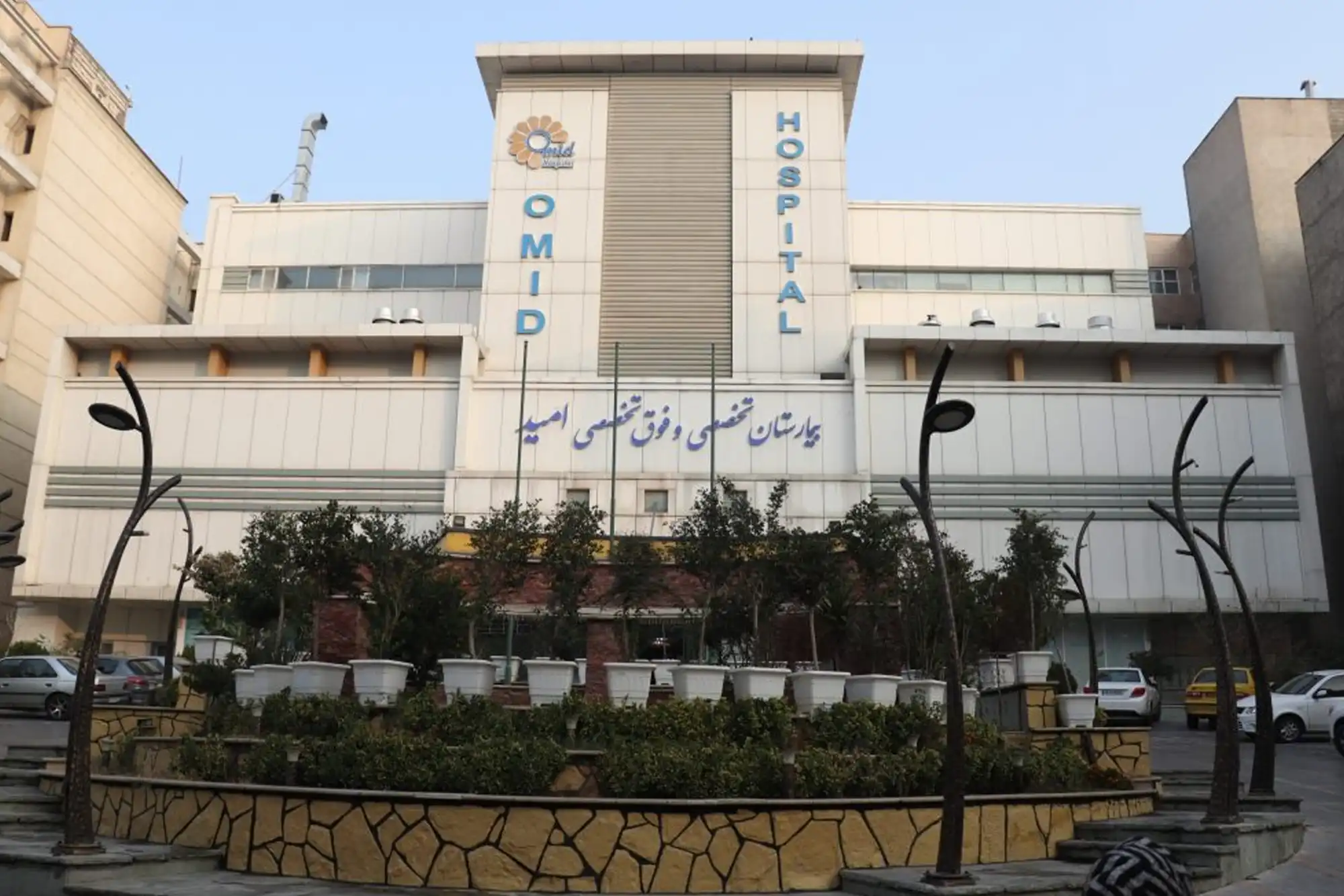
Omid Specialty and Subspecialty Hospital, affiliated with the Omid Charity Association, was officially inaugurated in 2017 (1396 in the Iranian calendar) in the presence of the then Minister of Health and Medical Education, Dr. Ghazizadeh Hashemi. The hospital was constructed brick by brick through the generous contributions of donors and equipped with advanced diagnostic and treatment facilities. Since its earliest days of operation, Omid Hospital has consistently maintained a Grade One accreditation from the Ministry of Health and Medical Education, reflecting its commitment to high-quality healthcare services. This facility is located in the western part of Tehran and operates with 115 active beds, designed to meet both national and international healthcare standards.
The primary motivation for establishing Omid Hospital was to address the fragmented nature of cancer care in Iran. Prior to its opening, cancer patients had to visit multiple medical centers to receive specialized laboratory services, advanced diagnostic imaging such as CT scans, mammography, and endoscopy, as well as surgical and inpatient care. This fragmented approach made the diagnosis and treatment process lengthy and exhausting, sometimes causing patients to abandon their treatment altogether due to long waiting times and the difficulty of accessing scattered services. The benefactors of the Omid Charity Association joined hands to bring all essential cancer diagnostic and treatment services under one roof, creating a centralized and efficient environment for patient care.
Although Omid Hospital operates as a general hospital and provides surgical and inpatient care for patients in fields such as cardiovascular medicine, nephrology, orthopedics, and internal medicine, approximately 70 percent of its inpatient beds are specifically allocated to cancer patients. Medical services at Omid Hospital are offered at charitable rates—higher than public-sector tariffs but lower than private-sector fees. After deducting operational expenses, the proceeds are used to provide medication and treatment for underprivileged cancer patients. In the Iranian year 1404 alone, the hospital waived more than 194 billion tomans in charges for financially disadvantaged patients whose cases were registered with its social work department. This charitable model ensures that Omid Hospital remains a genuine “choice beyond treatment” for those in need.
The history of the Omid Charity Association itself predates the hospital. The charity began its therapeutic services with a clinic that initially operated with just four chemotherapy beds. In 1997 (1376), the launch of a Cobalt-60 unit marked the first steps toward providing advanced cancer treatment. Two years later, in 1999 (1378), a second radiotherapy machine was purchased and installed. In 2010 (1389), with the help of donors, a linear accelerator radiotherapy machine was purchased from Siemens, Germany, and installed at the Omid Clinic. These developments laid the groundwork for the comprehensive hospital that opened in 2017, transforming the charity’s capacity to serve cancer patients in Tehran and beyond.
Regarding accreditation, the Ministry of Health and Medical Education evaluates hospitals across 19 different domains based on 110 standards and 550 indicators, covering leadership, risk management, patient rights, clinical care, emergency care, surgical and anesthesia care, imaging, laboratory services, human resources, environmental health, health information technology, medication management, nursing services, infection control, and outpatient services. Since its inauguration in 2017, Omid Hospital has consistently maintained its Grade One status, demonstrating the commitment of its management team to providing patients with the best and most comprehensive medical care possible. The hospital also features four fully equipped operating rooms, with equipment selected according to the type of procedure and incorporating some of the most advanced medical technologies available today.